Every Veterans Day, we take time to honor the men and women who have served our country. We recognize their dedication, sacrifices, and commitment to something greater than themselves. It’s also an opportunity to reflect on the challenges some veterans experience after their military service ends, including those that aren’t always visible to the people around them.
For many veterans, returning to civilian life involves more than adjusting to a new routine. Experiences during military service can leave lasting emotional and psychological impacts, and some veterans find themselves navigating post-traumatic stress disorder (PTSD), depression, anxiety, or other mental health challenges long after returning home.
We’re Here When You Need Support
At Columbia River Mental Health Services, we’re committed to making mental health care accessible to individuals and families throughout our community.
We offer same-day walk-in appointments Monday through Friday, from 7:45 a.m. to 2:00 p.m., on a first-arrival basis while openings are available. No appointment is necessary.
For questions or to schedule an appointment, call (360) 993-3000.
The Conversations That Can Be Hardest to Have
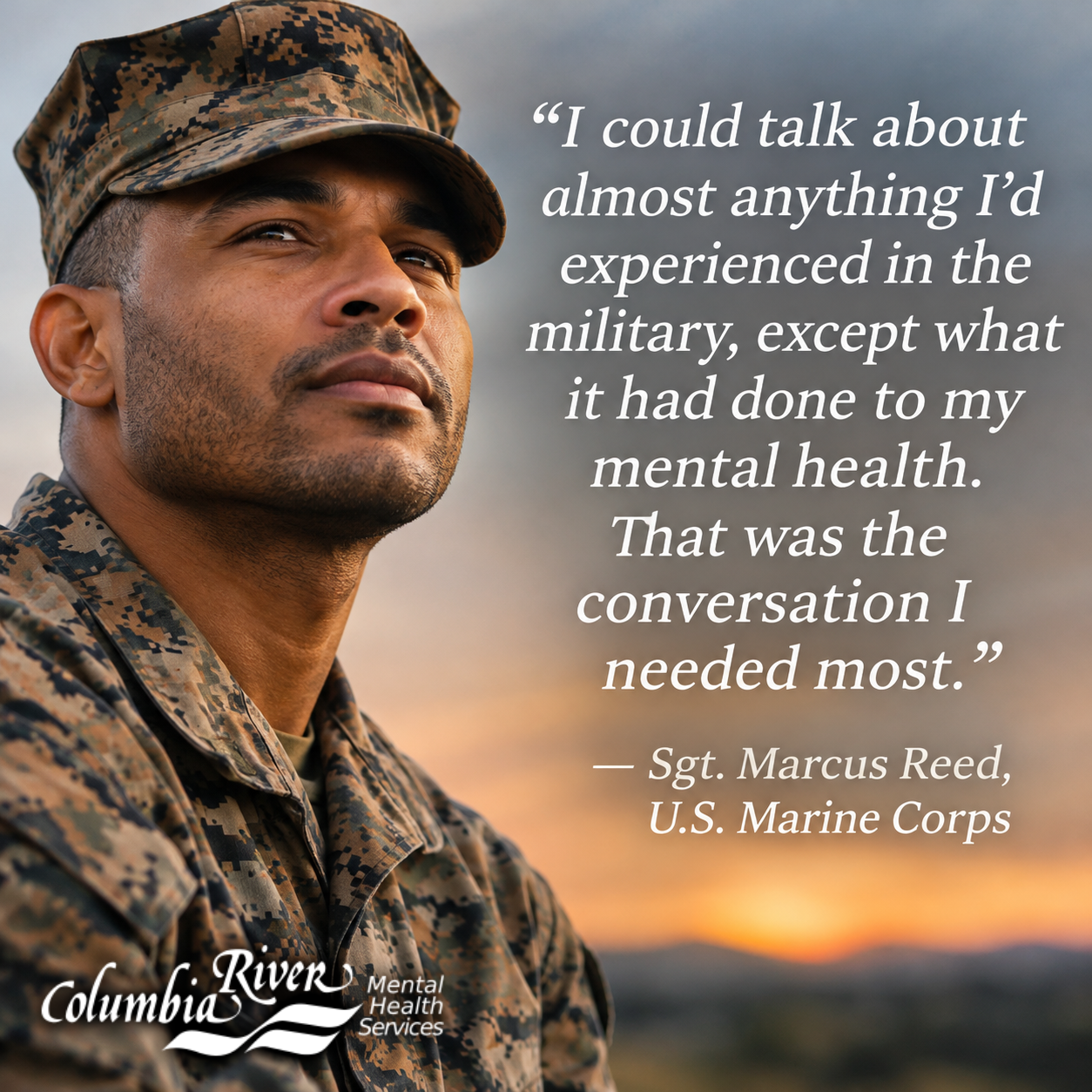 Military culture often emphasizes resilience, discipline, and the ability to persevere through difficult circumstances. While these qualities can be tremendous strengths, they may also make it difficult for some veterans to acknowledge when they’re struggling or reach out for support.
A veteran might feel comfortable sharing stories about their military experiences while finding it much harder to talk about how those experiences affected their mental health. Concerns about being misunderstood, judged, or perceived as weak can make those conversations even more challenging.
Yet talking openly about mental health can be an important step toward healing. Veterans deserve to know that seeking support does not diminish their service, their strength, or the sacrifices they’ve made.
Recognizing That Every Veteran’s Experience Is Different
Not every veteran experiences mental health challenges, and those who do may experience them in very different ways. Some struggle with memories of traumatic events, while others experience difficulty sleeping, irritability, emotional withdrawal, or challenges reconnecting with family and friends.
It’s important to avoid making assumptions about what someone has experienced or how they should feel. Listening without judgment, respecting personal boundaries, and offering genuine support can help create an environment where veterans feel more comfortable discussing their mental health.
Recovery is also different for everyone. For some, it involves therapy or medication management. For others, peer support, strengthening relationships, or rebuilding a sense of community may play an important role. Often, healing involves a combination of approaches tailored to the individual.
Honoring Veterans Beyond Veterans Day
One meaningful way to honor veterans is to ensure they feel supported throughout the year. This includes challenging the stigma surrounding mental health, encouraging open conversations, and recognizing that asking for help is not a sign of weakness.
We believe everyone deserves compassionate, individualized mental health care. We are here to help veterans and other members of our community navigate emotional challenges, develop healthy coping strategies, and find support on their path toward recovery.
This Veterans Day, we extend our gratitude to everyone who has served. Honoring their service also means recognizing their humanity, listening to their experiences, and reminding them that they don’t have to face life’s challenges alone.